
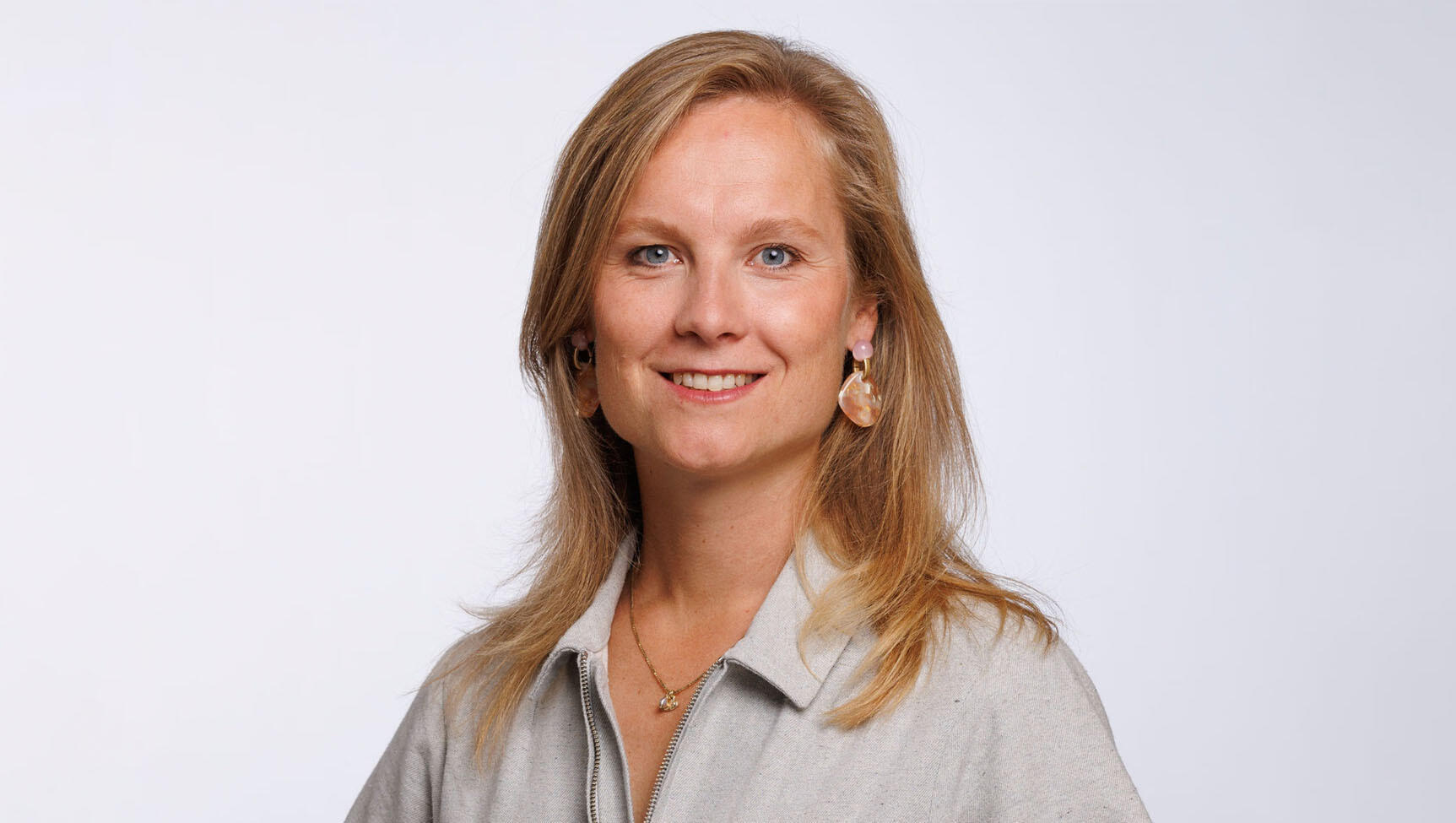
Jantine Zwinkels (CDA): “The energy transition calls for fewer regulations and more trust.”
CDA candidate for the House of Representatives Jantine Zwinkels wants to take the energy transition out of the meeting rooms and accelerate it in practice — not by stacking new targets, but through cooperation and trust. She sees hydrogen as an important part of a broad energy mix. “Hydrogen is green when it’s produced with wind, solar, or nuclear energy. Let’s not make it more complicated than that.”
Zwinkels is number twelve on the CDA candidate list, which gives her a good chance of entering Parliament. She is Sustainability Coordinator at Rabobank and CDA faction leader in the Utrecht city council. As a “climate candidate,” Zwinkels advocates for sustainable and affordable energy and mobility.
What is the CDA’s vision on the energy supply of the future, and what role does hydrogen play in it?
The energy system of the future will run on wind power — both offshore and onshore — solar energy, nuclear power, geothermal energy, and hydrogen. We support a broad and robust mix that ensures energy supply remains reliable and affordable. The energy transition is necessary because we must reduce dependence on autocratic countries, maintain our earning capacity and prosperity, and combat climate change. We’ve had two years of stagnation. It’s time to get the energy transition moving again.
In that transition, hydrogen plays an important role. It can help make industry more sustainable and serve as a storage medium for surplus renewable electricity. Hydrogen can replace natural gas in many places. We need to stimulate and accelerate the hydrogen market wherever possible. We must not miss any opportunities.
But we also have to be realistic. Hydrogen is not the holy grail, as many believed a few years ago. It’s mainly suitable as a raw material for the chemical and industrial sectors. I don’t see us heating homes with hydrogen. For heavy transport, it might be suitable, although the electrification of mobility is advancing rapidly and battery technology keeps improving. It’s hard to predict exactly what role hydrogen will play.
The Netherlands aims to have hydrogen plants with a combined capacity of 3 to 4 gigawatts by 2030. How realistic are those targets?
That goal seems out of reach. We need to choose the right direction and do what’s needed now. Electrolyzers must be able to connect to the power grid in an attractive way. We should discuss with grid operators and the regulator (ACM) how to arrive at workable tariffs. It’s also worth considering using general public funds to finance infrastructure investments — not only for hydrogen but also to tackle grid congestion.
We should be less rigid about ambitious targets. The transition should also offer a hopeful perspective: What are the opportunities? What can move us forward? We want to take a pragmatic approach to see what can be accelerated. Businesses and households must benefit; otherwise, we’ll lose public support.
The minister has extended the deadlines for hydrogen subsidies because of delayed infrastructure (Delta Rhine Corridor). Is that enough to get hydrogen production going?
It’s a good thing those deadlines were adjusted — something the CDA also pushed for through a motion by Henri Bontenbal. Adjusting deadlines helps, but it’s not enough. We strongly support a Vital Infrastructure Act, which would accelerate investments in energy and hydrogen networks. Our energy system needs robust infrastructure for both electricity and hydrogen to strengthen the resilience of the Netherlands. The Delta Rhine Corridor is a good example of that. It’s about choosing direction and investing in the energy supply, economy, and society of the future.
In practice, slow permit procedures often block such investments. How does the CDA want to speed those up?
We must indeed shorten processing times. Public participation is important, but there should be limits to endless objections. Important steps have already been taken, such as local ownership and participation models.
If I enter Parliament, I’ll definitely work on proposals in this area — hopefully together with other parties. The transition is a joint effort between businesses and governments. It’s a shared interest, but it’s not always treated that way. Sometimes frustration arises over data requirements for permit applications, leading to mutual blame. For me, the key is to work more on the basis of trust, and less on control. If we try to check everything to eliminate all risks, one thing is certain: the transition will not speed up.
The essence is that businesses should be able to ramp up sustainable investments to accelerate the transition — and the government should facilitate that. Governments and businesses must be true partners in the transition, at all levels — local, regional, and national.
How does the CDA view blue hydrogen — hydrogen from natural gas with CO₂ capture — as a temporary solution?
We support including blue hydrogen as part of the mix. Of course, I prefer green hydrogen, but that takes more time to develop. Blue hydrogen belongs in the mix for now. Carbon capture and storage (CCS) is not my favorite solution, but it’s necessary. Still, blue hydrogen should only be a temporary measure. Our task is to produce green hydrogen, and hydrogen from natural gas must not stand in the way of that — otherwise, we remain dependent on gas.
You can see this approach at Tata Steel, which recently signed a declaration of intent with the government to make the steel plant in IJmuiden more sustainable. I’m cautiously optimistic about that. CO₂ storage is part of the sustainability package, and that’s fine, but Tata must also make real progress toward green hydrogen. For now, it’s an important step — the local community simply wants cleaner and healthier air in IJmuiden. This move helps, but it must be followed by the next step.
There are many complaints about high energy prices in the Netherlands. The ACM regulates grid tariffs. Should the ACM change how it calculates those, for example by writing off investments over a longer period?
I’d ask the ACM to come up with a proposal. How can we spread future investments more fairly? The CDA believes that part of the system costs for infrastructure could be covered by public funds. We could also extend the depreciation periods. If we don’t, tariffs will rise too sharply, causing stagnation. We need a fair distribution of costs.
We should also cooperate more closely with other countries. We want to follow EU rules, but if other countries apply exceptions, we need to discuss that. We should create a level playing field. More European cooperation is needed to advance energy and climate policy.
But infrastructure investments will cost €200 billion. Even with longer depreciation, how can energy remain affordable?
We can’t avoid major grid upgrades or investments in the Delta Rhine Corridor — they’re essential for the hydrogen market. These investments are necessary. If they can be done more cheaply, great — but we know that infrastructure projects often end up costing more. We must be honest about that.
How could it be done more cheaply?
There are many initiatives to use infrastructure more efficiently — mainly in electricity, less so in gas or hydrogen. If we can make better use of the grid, we should. That’s also important for the hydrogen market, since electrolyzers need a grid connection too.
There’s a lot of potential — for example, flexible energy contracts that encourage use during off-peak hours and discourage it at peak times. In Utrecht, there’s already a district-level contract: the new city district Merwede is being built thanks to an innovative group energy contract. In other areas, like the Lage Weide business park, grid expansion is urgently needed to enable an energy hub and further growth. As local government, we’re waiting for that. We must quickly move past the situation where housing projects can’t proceed and businesses can’t expand or go green.
We need all our creativity: new contract models, energy hubs, smart charging for electric cars, and more. There’s much to gain. I hope the ACM and grid operators fully engage and facilitate this more than they already do.
Speaking of the grid: the ACM wants hydrogen plants in the Netherlands to pay for their grid connection. In Belgium and Germany, that’s not required. Should we make an exception here too?
In principle, it’s logical that everyone who uses the grid contributes to its costs. But we shouldn’t put the cart before the horse. If you distribute costs “fairly” but no one invests in electrolysis, you achieve nothing. What’s reasonable? How do we avoid grid fees becoming a new bottleneck in the transition?
We could take another approach: if electrolyzers or battery parks provide a system solution — preventing renewable energy waste — they could receive a financial reward. That’s worth exploring. I’d ask the ACM to develop a proposal on this. My view is that we should avoid introducing laws and regulations that create new obstacles. We should facilitate innovation, not hinder it.
The Netherlands is pushing for more flexible EU rules on renewable hydrogen. How effective has the Dutch lobbying in Brussels been? Should the Netherlands join initiatives by France and Germany that have reportedly reached agreements?
It would be wise to work together with like-minded member states and pursue a joint lobby. We support a less rigid definition of green hydrogen. Henri Bontenbal has already proposed this in Europe.
If you produce hydrogen from electricity generated by an existing wind turbine, is that not green? That’s absurd. We must get rid of overly complex definitions. For me, it’s simple: hydrogen is green if it’s produced with wind, solar, or nuclear power. Green hydrogen does not come from natural gas — it comes from renewable energy. That’s the essence. Let’s not make it unnecessarily complicated.
The elections are approaching. Is the energy transition getting enough attention in the political and public debate?
Haha, you’re asking the CDA’s “climate candidate”! I personally find it very important and take part in many debates — probably the most after Henri Bontenbal. There’s certainly a lot of attention for energy, industry, and climate issues.
But in the major party leader debates, topics like migration or the state of democracy often dominate — important, of course, but I do my best to keep energy and climate high on the agenda. I try to do so from a positive perspective. Many citizens don’t connect with the constant doom narratives about the climate crisis. The urgency is there, but we must also offer hope and perspective to make climate policy feasible and to get people on board.
That doesn’t mean we abandon our climate ambitions. The CDA stands by the Paris Agreement. But the reality is that climate policy is under pressure. From the far-right side, there’s a lot of cynicism. I see myself as a centrist — someone who feels responsible for future generations. Climate is a topic that can easily polarize, so I focus on the shared interests: the economy and geopolitical independence.
The government is accused of “yo-yo policies.” How would the CDA ensure long-term certainty for hydrogen companies so they invest despite shifting politics?
By holding each other accountable. We all want policy to bear fruit. Politicians must show restraint and not constantly add new rules and targets. If we’ve settled something well at the European level, let’s stick to that.
Besides focusing on execution instead of new policy, we must cherish our institutions. The Court of Audit and the PBL (Environmental Assessment Agency) monitor and safeguard the long-term direction of government policy. That mirror is essential. We must ensure these institutions can continue doing their job properly.
If you enter Parliament after the elections, what concrete steps will you take to accelerate the hydrogen market?
I find it very important to tackle grid congestion quickly. A Vital Infrastructure Act could solve many bottlenecks. We need to find ways to accelerate investments and make smarter grid use more attractive. I also want to visit colleagues in Brussels quickly, because anything we can arrange at the European level immediately creates a level playing field for Dutch businesses.
Regarding hydrogen, I want to help remove bottlenecks in building electrolyzers. How can we bring down the cost of producing green hydrogen so that it becomes an attractive energy carrier or raw material for the chemical and industrial sectors?
More generally, I’d say we should tone down policy debates about ambitious climate targets and focus on implementation. I mainly want to spend my time on concrete and pragmatic solutions.