
Hydrogen in the North Holland Agri Sector
What do agricultural companies have to do with hydrogen? Probably more than you think. In North Holland, decentralized research and experiments are underway to explore the potential for hydrogen production, transport, and use on farms. Beau Broen, Project Manager Hydrogen, says: “We do it together, but it’s the local entrepreneurs who are taking the risks.”
Back to the beginning
On November 21, 2019, Greenport Program Director Jeroen Noot gave a presentation to bulb growers in Julianadorp. “Afterwards, it became clear that they were interested in participating in innovative projects,” Noot explains. “It was evident that energy transition issues are relevant in the sector—think grid congestion, low feed-in tariffs or even negative electricity prices, and alternatives to natural gas. When plans emerged for a hydrogen backbone in the region, the idea arose to explore the opportunities for hydrogen in a bulb-growing business.”
H2 in Agri Deal
“Research showed that economic feasibility was low and that the use of hydrogen in transport and heavy machinery was the most obvious starting point,” he continues. “The main outcome was that we identified a significant number of entrepreneurs seriously interested in hydrogen. Following this, New Energy Coalition, Ontwikkelingsbedrijf NHN, and Greenport NHN established the ‘H2 in Agri Deal’ to accelerate hydrogen adoption in the agri sector through collaboration and mutual networks. It was also important to provide entrepreneurs with support in hydrogen knowledge and technology applications.”
Four projects
Fast forward to today. The Fieldlab Hydrogen in Agri project has been running since July 6, 2023, and consists of four subprojects: Wieringerwerf, Andijk, Zwaagwijk-Oost, and Alkmaar. The first project focuses on testing and demonstrating hydrogen in agricultural machinery; the second on hydrogen production and use on farms; the third on hydrogen for heating greenhouses; and the fourth on creating a Living Lab for electrolysis at a university of applied sciences. These projects are funded by the European Regional Development Fund (ERDF), aimed at reducing economic disparities between regions while boosting regional competitiveness and employment.
Scalable
“There is a clear connection between the projects,” Broen explains. “All relevant parties in the hydrogen chain are represented: producers, users, providers, and knowledge sharers. Moreover, the projects are scalable.”
Hydrogen-powered machinery
The first project, Hydrogen and Agricultural Machinery, takes place at Loonbedrijf Sturm-Jacobs. Entrepreneur Pim Sturm owns around thirty tractors and fifteen excavators. Can these machines run on hydrogen? “It’s not so simple, because there are no companies currently producing tractors or excavators powered solely by hydrogen. These machines also experience high vibrations from rough terrain, which makes it difficult to apply fuel cells, as they generally require a stable operating environment. This limits the options to hydrogen combustion engines instead of fuel cells and requires significant investment, making it a high business risk. The plan now is to convert one tractor or excavator into a prototype. In the future, Sturm-Jacobs will lend the machines to local farmers as part of the Fieldlab project to test their suitability.”
Hydrogen bunkering
As part of the practical project at Sturm-Jacobs, Avia Marees is researching the potential for storing hydrogen in high-pressure cylinders for agricultural users. Beau explains: “Research shows a mismatch between what agri-entrepreneurs can currently take and what the project envisioned. This requires rethinking roles due to the limited uptake. For example, the idea of bunkering hydrogen only works if there are entrepreneurs willing to use it. Therefore, a survey is now being conducted in the region to understand their needs and demands.”
Energy playground
The second project, Hydrogen in Energy Systems, is at Rainbow Colors, a large tulip grower that has already gone off natural gas. “It’s like an energy playground,” Broen laughs. “Entrepreneur Bas Karsten has his own aquifer thermal energy (WKO) system, a 4.3 MWh battery with 1.5 MW capacity, has completely gone off gas, and has 1.7 MW surplus solar capacity. He wants to convert unused solar energy into green hydrogen and use the electrolyzer’s residual heat for his greenhouses. Where others hesitate, Bas perseveres. Being told something is impossible motivates him. This has brought him great success so far. He is a frontrunner and an example—a very innovative and progressive partner in the consortium. And the beauty is, he could just as easily have been your neighbor.”
Heating greenhouses
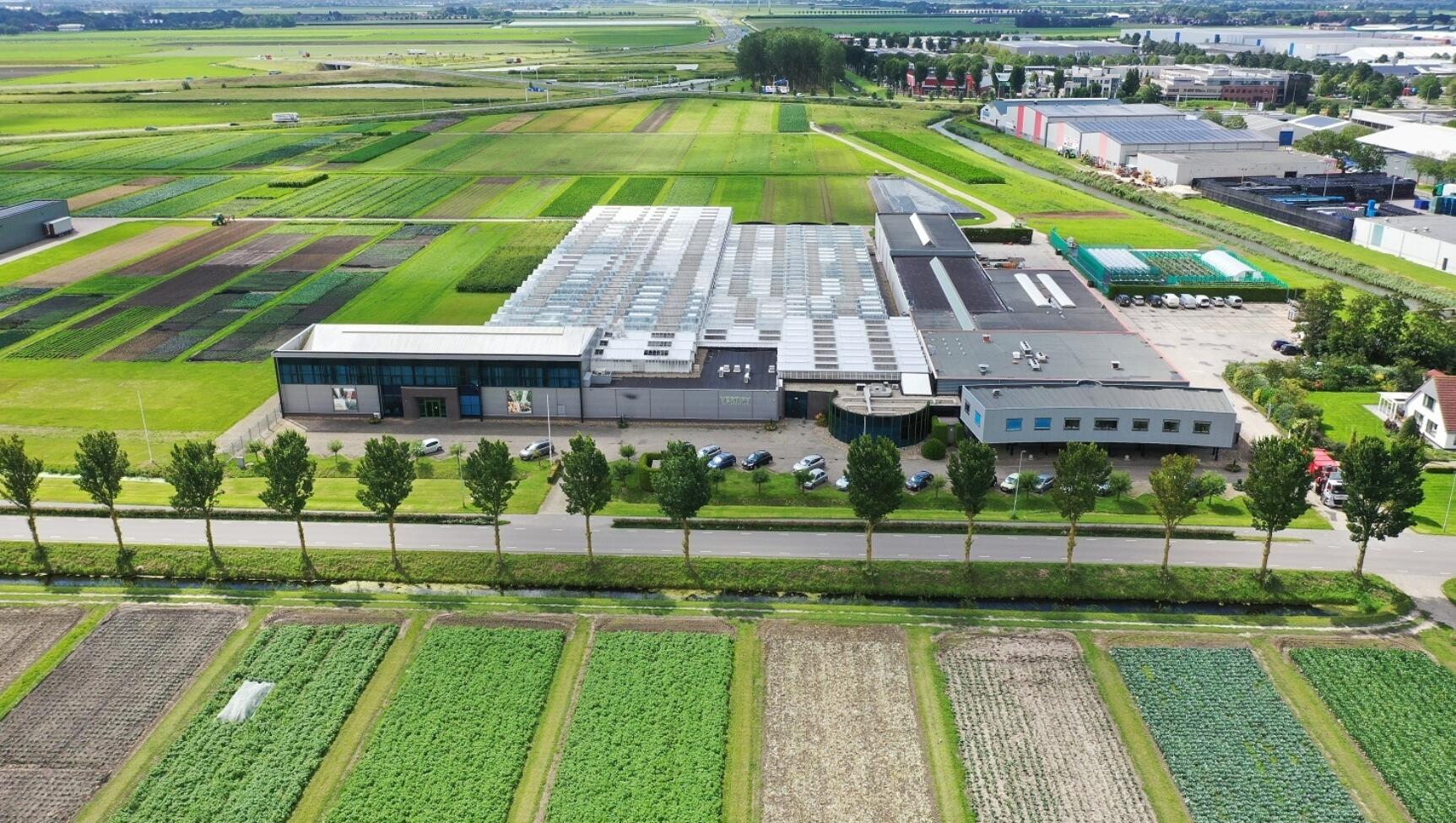
The third project focuses on setting up a heat lab and exploring hydrogen-powered heating systems through Vertify. Can hydrogen replace natural gas for greenhouse heating? Broen explains: “Since a small, affordable electrolyzer was not readily available from the market, it was challenging for Vertify to test hydrogen in this project. Vertify is now exploring whether hydrogen produced on farms can be sold. A student from Inholland has already conducted research on this. Next steps are currently being determined.”
Living Lab
Inholland has been investigating how to set up a Living Lab—the fourth practical project. “I expect this project to really take off toward the end of its term.” In addition to practical projects, there are two research and educational projects. “When hydrogen becomes a sustainable solution, trained personnel will also be needed. That requires education. Vonk and Inholland are working on this. Master’s students from Hanze University in Groningen have already contributed to the Fieldlab by conducting energy studies at Sturm-Jacobs and Rainbow Colors. Vonk and Inholland want to build on this experience and explore how they can strengthen each other. They are also looking at how the Fieldlab can connect with hydrogen communities.”
Partners in Fieldlab
Broen guides and supports the involved parties in the practical pilots. “I provide technical support for knowledge sharing and business development, connecting the right parties to move from plan to implementation. But above all, the Fieldlab is a collaboration. The entire consortium is capable of getting projects moving. Everyone contributes, but if I have to name a few: Jeroen Noot, Waronne Sint, Bas Karsten, Pim Sturm, and Ruud Bakker as initiator and inventor of Next Generation Machinery. The province is also becoming increasingly important due to water needs. A solid water plan is required, as water is essential for producing hydrogen through electrolysis.”
Ordinary people
“I love that the Fieldlab is driven by ordinary people, not big companies with huge budgets,” Broen concludes. He admires the relatively small entrepreneurs involved. “While many large players in the energy transition focus on the difficulties of the business case, these entrepreneurs take the leap despite the risks. They do it for both idealistic and rational reasons. As Pim Sturm says: ‘If I can’t explain it to my children, I shouldn’t do it.’ I’m convinced that societal support for the energy transition must come from the people. Change is possible, and you and I can contribute. These local entrepreneurs are showing that.”