
A “Renewable Energy Valley” in Our Own Boekelermeer
“What makes the REFORMERS project at Boekelermeer in Alkmaar so special? It’s about integrating and optimizing multiple energy carriers. It’s about creating a decentralized ecosystem that can later be connected to the national hydrogen backbone. And most importantly: we’re actually doing it. Realization: 2026–2027.”
Speaking is project manager Joep Sanderink from New Energy Coalition (NEC). According to him, the strength of the “renewable energy valley” being developed in Alkmaar lies in the optimal use of different energy carriers — and in breaking the classic chicken-and-egg dilemma by setting up complete decentralized value chains.
“Hydrogen used to be the big buzzword, but by now we know it’s not the answer to everything. That’s why it’s important that we produce and integrate multiple energy carriers in the mix at Boekelermeer — and that we find the optimal role for the production and application of hydrogen.”
Renewable Energy Valley
Let’s go back to the beginning: how did this project, supported by a European Horizon grant, end up in Boekelermeer?
“We’ve been working with local partners for years,” Sanderink explains. “In another European project, I worked with regional partners on making cultural heritage cities more sustainable — with Alkmaar and Évora (Portugal) as flagships. That project focused on ‘energy-positive’ buildings, but Alkmaar’s ambitions go further: how can we make the entire region more sustainable, boost the regional economy, and tackle grid congestion — a serious issue here?
When the Horizon program opened a call in 2022 for developing and realizing ‘renewable energy valleys,’ it was a perfect opportunity to participate. REFORMERS brought together a consortium of 27 partners from 10 countries and submitted a proposal.”
In 2023, the good news arrived: they were awarded a €20 million grant to get started.
Ideal Location
The starting conditions were favorable from the outset, says Sanderink.
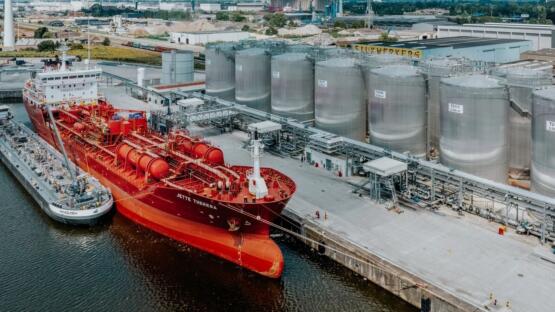
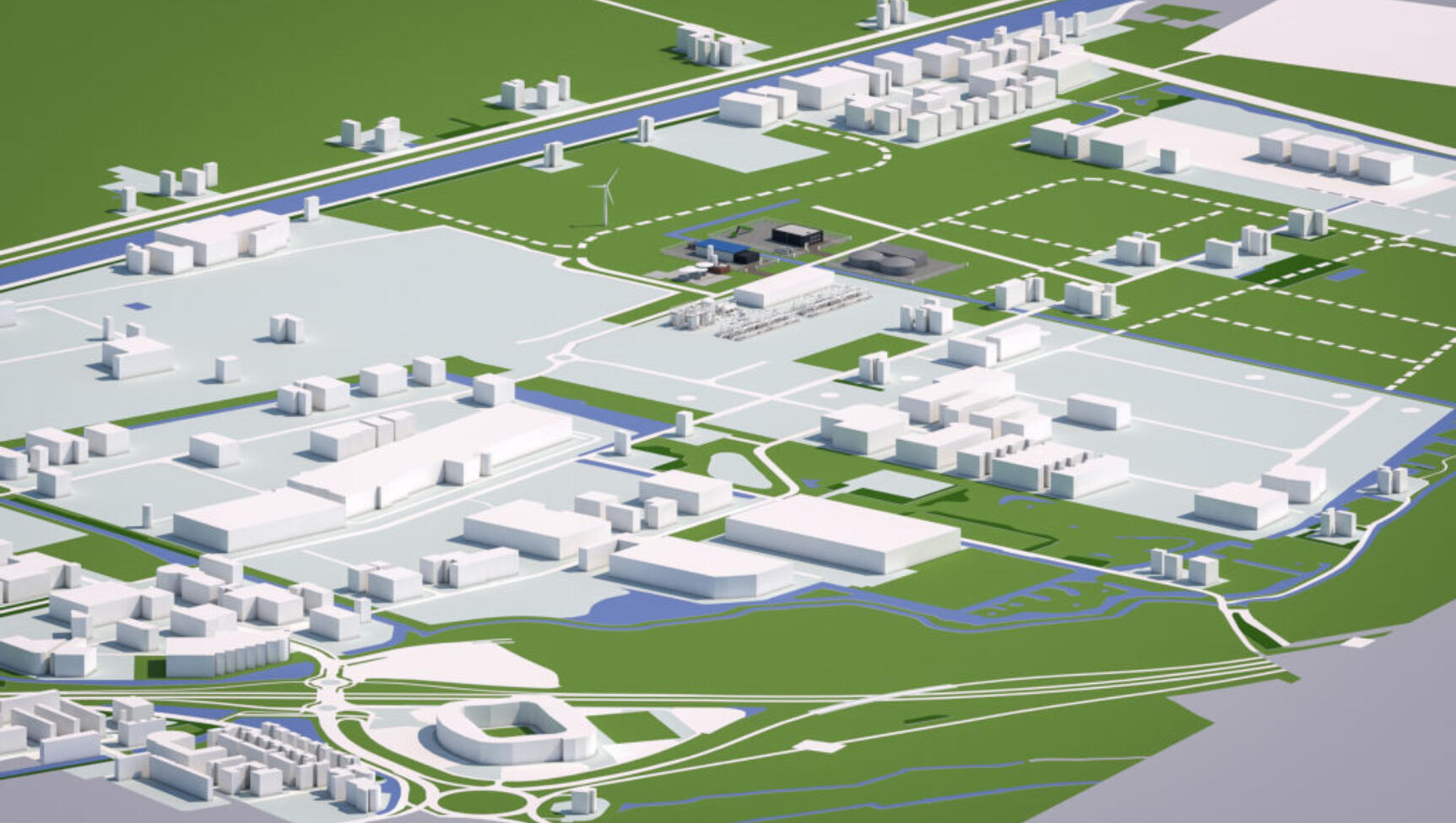
“Many pieces of the puzzle for a future-proof energy system are already here. There are four wind turbines, a solar park, a bioenergy plant, a district heating network, and an extensive gas network with pipelines, treatment, and storage facilities. The latter can eventually be used for transporting and storing green molecules such as hydrogen and biomethane.
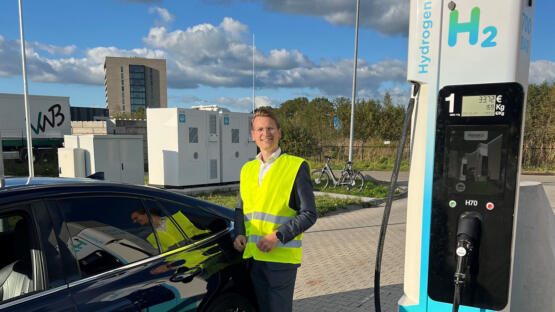
Moreover, the Energy Innovation Park Alkmaar — with the InVesta expertise center at its core — serves as a breeding ground for energy innovation, featuring a digester, a gasifier, and NXT Mobility’s hydrogen refueling station for both passenger vehicles and heavy FCEVs operating at 350 or 700 bar.
With REFORMERS, we’re adding new pieces to that puzzle — and putting it all together.”
Thermolysis
Within REFORMERS, two companies will produce hydrogen.
The first is HYNOCA. “They will produce 30 kilograms of hydrogen per hour from organic waste using their patented thermolysis technology,” Sanderink explains. “Through thermolysis, biochar and syngas are made from organic residues. The CO₂ is stored in the biochar, and hydrogen is extracted from the syngas via a process called steam ironing.
Because CO₂ is captured in the biochar, the process achieves a negative carbon footprint. Moreover, production is not dependent on renewable electricity but on organic feedstock, which keeps costs low and ensures continuity. A wide range of biogenic waste streams can be used — agricultural residues, roadside grass, sewage sludge, seaweed, manure, waste wood, and even plastic waste, which can be thermochemically converted in a form of chemical recycling.
HYNOCA’s capacity is at demonstration level. It won’t yet meet the full regional hydrogen demand, but the goal is to show what’s possible — and the technology is scalable.”
High Flexibility
The second hydrogen producer is the German start-up Stoff2.
“They combine an electrolyzer with renewable power storage,” says Sanderink. “A challenge with green electricity is that it’s not continuously available — there can be a surplus during sunny or windy periods and shortages at other times. By storing renewable electricity during periods of oversupply, you can later convert it into hydrogen when supply is low.”
Distribution
“The entire chain is represented,” Sanderink continues. “Hydrogen production is already underway, and we’re also focusing on distribution. A pipeline will connect to the nearby refueling station, and we’re building a Docking Station to fill tube trailers for wider hydrogen distribution.
End users are already on board — including the refueling station, but other interested buyers have also come forward.”
Why this decentralized setup instead of waiting for the national hydrogen backbone?
“We want to push the energy transition forward — we can’t wait years. Besides, the backbone will be meaningless without users. By building this decentralized system, we’re creating hydrogen-related activity in the region — which in turn strengthens the case for constructing the backbone.”
Under Close Watch
Hydrogen production and use are just one part of the story.
“Hydrogen is only one piece of the larger energy transition puzzle. Alongside hydrogen, we’re expanding the district heating network using geothermal heat, matching electricity production and consumption locally, and installing batteries to ease the load on the grid. We’re also producing green gas and capturing CO₂ by cultivating algae,” Sanderink lists.
International attention is high. Under the Horizon program, six other regions in Europe have been designated to develop their own “renewable energy valleys.” They are closely following developments in North Holland so they can later implement similar initiatives. The Vrije Universiteit Brussel coordinates this European cooperation.
A Challenging Sector
Their efforts have not gone unnoticed. In May 2025, REFORMERS received the Clean Hydrogen Project Award at the World Hydrogen Summit in Rotterdam.
“That recognition is thanks to the dedicated and innovative partners involved — such as HYNOCA, Stoff2, InVesta, Alliander, and Adsensys, which handles the engineering — and NEC itself, which ensures that every partner can play its part,” says Sanderink.
Pioneers
The hydrogen sector faces many challenges — so how is REFORMERS succeeding where others stall?
“There are hundreds of projects on the Dutch hydrogen map, but most never reach actual implementation,” Sanderink acknowledges. “That’s unfortunate. Grid congestion, permitting delays, financial and technical hurdles, and business case issues — there are plenty of obstacles.
We have the advantage that part of our investment is covered through REFORMERS, and that InVesta holds an umbrella permit, meaning we don’t need additional permits as long as we stay within its scope.
But above all, success requires pioneering partners — those willing to take risks in this challenging sector, who don’t get discouraged by setbacks. And we have those partners on board.”